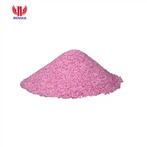
Cryolite, also known as sodium hexafluoroaluminate or sodium aluminum fluoride, has colorless, white fine crystals in appearance, and also has light gray, light brown, light red or brick red. The hardness of cryolite is 2-3, so it is easier to absorb water and get damp.
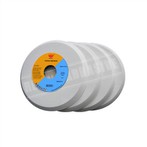
Cryolite is generally used as a wear-resistant filler for grinding wheels and rubber, which can improve the durability of the grinding wheel, have a better effect in grinding and cutting, and delay the service life and storage time of the grinding wheel. It can also be used as a flux for aluminum electrolysis, enamel opalescent agent, glass opacifier and metal flux, etc. Cryolite has relatively good stability, is not easy to volatilize, decompose, and deliquescence under normal conditions, has a higher melting point than aluminum, and has better electrical conductivity, which can save electricity. It is because of the existence of cryolite that there is such a large-scale aluminum industry in the world.
The composition of cryolite is relatively pure, and sometimes it may contain Ca, Fe, Mn and organic matter, but they are all in very small amounts.

Types of cryolite:
Cryolite can be divided into high molecular ratio cryolite and low molecular ratio cryolite, which are defined according to the molecular ratio of sodium fluoride to aluminum fluoride. The molecular ratio of low molecular ratio cryolite is 1.8-2.2. However, polymers are more environmentally friendly than cryolite and have better economic benefits. Therefore, some domestic electrolytic aluminum factories generally use polymer cryolite as the electrolyte for aluminum electrolysis. In terms of physical properties, cryolite can be divided into three categories: sandy cryolite, granular cryolite and powder cryolite.
1. Features of sandy cryolite:
◆ The melting point is low and the melting speed is fast, which can improve work efficiency;
◆ The molecular ratio can be adjusted in a wide range, so that it can adapt to the different requirements of the cryolite molecular ratio in different periods of the electrolytic cell;
◆ The moisture content is low, so the loss of fluorine will be relatively small;
◆ Granular will have better fluidity and more convenient transportation;
◆ Production costs are lower.
2. Features of granular cryolite:
◆ It has better fluidity and is more suitable for mechanized cutting;
◆ In electrolytic production, there is a higher yield rate, which helps to reduce the cost of electrolytic aluminum;
◆ It is very suitable for the opening of electrolytic aluminum, because its molecular ratio is between 2.5-3.0;
◆ The particle range is between 1-10mm.
3. Features of powdered cryolite:
◆ The particle size is usually above 200 mesh;
◆ Because its molecular ratio reaches 1.75-2.5, it has good adjustability;
◆ The pass rate of 325 mesh is above 98%, which can meet the strict requirements of cryolite in some special industries.