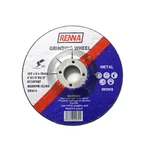
When machining hard materials such as tool steel, grinding burns are one of the most frustrating problems. Many people assume the grinding machine lacks sufficient precision, but in many cases, the real causes are improper wheel selection or inadequate dressing. As a core tool for precision grinding, a vitrified grinding wheel can help prevent burns at the source when properly selected and dressed. On the other hand, even highly precise equipment may struggle to produce qualified parts if the wheel is not properly matched and maintained. Here is a practical selection and dressing solution based on common machining conditions to help eliminate grinding burns.
1. First Understand the Main Causes of Grinding Burns
Grinding burns occur when the heat generated during grinding cannot be dissipated quickly enough, causing the workpiece surface temperature to rise sharply above the transformation temperature. This can lead to oxidation, tempering, or even cracking. Heat generation and dissipation are directly affected by the performance and condition of the vitrified grinding wheel. Three common causes are:
Dull abrasive grains:
Once the grains become dull, they can no longer cut efficiently and instead rub against the workpiece, causing friction and a rapid increase in heat.
Poor chip evacuation:
When the pores of the wheel become clogged with grinding debris, heat cannot be carried away effectively and continues to build up on the workpiece surface.
Mismatch between grinding parameters and wheel specifications:
For example, using a fine-grit wheel for dry rough grinding or a hard wheel on hardened steel can increase grinding forces and heat generation.
The key factors affecting grinding burns are the abrasive, grit size, wheel hardness, structure, and sharpness after dressing. Proper selection and dressing can solve most burn-related problems at the source.
2. Core Solution 1: Choose the Right Vitrified Grinding Wheel
The basic selection principle is to keep the wheel sharp while providing effective chip evacuation and heat dissipation, while also matching the workpiece material and grinding operation.
(1) Select the Abrasive According to the Workpiece Material
Tool steel (HRC 55–65) / high-speed steel:
CBN vitrified grinding wheels are preferred. CBN grains offer high hardness, excellent wear resistance, and sharp cutting edges, allowing efficient cutting with less heat generation than conventional alumina wheels.
Cemented carbide / glass molds:
GC (green silicon carbide) vitrified grinding wheels are suitable. Their high hardness and relatively brittle structure provide good self-sharpening, helping expose fresh cutting edges before excessive heat builds up.
Carbon steel / low- to medium-hardness steel (HRC <50):
A (white aluminum oxide) vitrified grinding wheel is a cost-effective choice. With appropriate grinding parameters, it can provide stable performance while minimizing the risk of burns.
(2) Select the Grit Size and Structure According to the Grinding Stage
Rough grinding (stock removal and scale removal):
The priority is fast chip evacuation and good heat dissipation. Use coarse grits such as 46–60 and a more open structure such as 7–9. The larger spacing between abrasive grains allows chips to escape quickly and prevents heat buildup. A softer hardness grade such as L–M also allows dull grains to release in time and keeps the wheel sharp.
Semi-finishing / finishing (precision grinding and burn prevention):
The focus is on balancing cutting sharpness and surface finish. Use medium-fine grits such as 80–120 with a medium structure of 5–6. A medium hardness grade such as N helps maintain dimensional accuracy while retaining sufficient self-sharpening ability.
Mirror grinding (high precision with minimal burn risk):
Use fine-grit CBN vitrified grinding wheels in the 150–800 range with a microcrystalline vitrified bond. The uniform grain distribution and low cutting force help achieve a fine surface finish while reducing heat generation. When combined with high-speed grinding at 80–120 m/s, the process can deliver high-quality results without burning the workpiece.
(3) Important Note: Match the Bond with the Wheel Speed
Regardless of the abrasive type, a vitrified bond (V) is recommended. Its high-temperature resistance, above 1,000°C, is significantly better than that of resin bonds, allowing it to withstand the heat generated during high-speed grinding and reducing heat-related grain loss. Wheel speeds are generally recommended in the range of 35–80 m/s. For high-speed grinding, sufficient water-based grinding coolant should also be provided, with a flow rate of at least 20 L/min, to improve heat removal.
3. Core Solution 2: Dress the Wheel Correctly for Smoother Grinding
Even the right wheel can cause burns if it is dressed incorrectly. The purpose of dressing is to create sharp and uniform cutting edges while opening clogged pores. The following methods can be applied according to the wheel type and grinding conditions.
(1) Select the Dressing Tool According to the Wheel Type
CBN / GC vitrified grinding wheels:
Diamond dressing rolls are preferred, with a typical accuracy of ±0.002 mm. They are suitable for batch production and provide accurate wheel profiles and consistent cutting edges after dressing, helping the wheel maintain its sharpness for longer periods.
A (white aluminum oxide) vitrified grinding wheels:
A diamond dressing stick can be used. It is more economical and flexible, making it suitable for small-batch and multi-product machining.
(2) Adjust Dressing Parameters According to Grit Size
Dressing parameters directly affect wheel sharpness. The following are reference settings:
Coarse grit (46–60):
Dressing roll speed of 5–8 m/min, with a feed of 0.01–0.02 mm per pass. Two to three dressing passes are generally sufficient. Maintain adequate pore space for efficient chip evacuation.
Medium-fine grit (80–120):
Dressing speed of 8–10 m/min, with a feed of 0.005–0.01 mm per pass. Three to four passes help create more uniform cutting edges and reduce rubbing and heat generation.
Fine grit (150 and above):
Use light feed with multiple passes, typically 0.002–0.005 mm per pass and four to five dressing passes. This helps maintain sharp, consistent cutting edges and minimize frictional heat.
(3) Dress the Wheel at the Right Time
Do not wait until the wheel becomes severely dull. Dressing should be performed when any of the following conditions appear:
The workpiece surface begins to show a slight yellow or blue discoloration, or the workpiece temperature noticeably increases.
Wheel vibration increases and grinding accuracy begins to deteriorate, such as a flatness deviation exceeding 0.01 mm.
The grinding sound becomes dull. Instead of a clear cutting sound, you hear more rubbing or friction.
4. Common Mistakes That Can Make Grinding Burns Worse
Mistake 1: Choosing an excessively fine grit to improve precision
Correction: Fine-grit wheels have poorer chip evacuation and can cause heat buildup when used for rough grinding. Use coarse grits for rough grinding and finer grits during finishing.
Mistake 2: Removing too much material in a single dressing pass
Correction: Excessive dressing feed can leave the wheel with less effective cutting edges, increasing friction and heat. Use a light feed and multiple dressing passes instead.
Mistake 3: Ignoring grinding coolant or providing insufficient cooling
Correction: Even with the correct wheel, dry grinding or insufficient coolant flow can prevent effective heat removal. Water-based grinding coolant is critical for cooling, and the flow rate should be maintained at 20 L/min or higher.
Mistake 4: Selecting a wheel that is too hard
Correction: Hard wheels hold abrasive grains too tightly. Once the grains become dull, they continue rubbing against the workpiece and generate excessive heat. When grinding hardened steel, a softer wheel grade is generally preferred to maintain self-sharpening.
5. Final Reminder: Proper Selection + Dressing Is the Key to Preventing Burns
Grinding burns are not difficult to control when the two fundamentals are addressed: reduce heat generation and remove heat efficiently. Select the wheel according to the workpiece material and grinding stage, matching the abrasive, grit size, hardness, and structure. During operation, dress the wheel correctly and at the right time, while providing sufficient cooling. Following these principles can greatly reduce the risk of grinding burns and improve overall grinding quality.