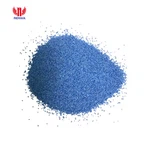
The production process of brown aluminum oxide cloth usually involves combining brown aluminum oxide sand with a binder, and then coating, drying, curing and other processes to finally make high-quality emery cloth material. Emery cloth is a common abrasive product, widely used in grinding, polishing, cleaning and other processes. The following is the production process of brown aluminum oxide cloth:
1. Raw material preparation
· Brown aluminum oxide grit: It is recommended to use P sand for coated abrasives. The particle size is selected according to the purpose and requirements of the emery cloth. Common particle sizes range from P36 to P6000. The finer the particles, the finer the grinding effect, but the production cost is higher.
· Base cloth: The base cloth is the supporting material of the emery cloth, usually cloth (such as cotton cloth, polyester cloth, etc.) or paper. The strength, toughness and flexibility of the base cloth need to meet the application requirements of the emery cloth.
· Binder: Commonly used binders include resins (such as phenolic resins), silicate adhesives, etc., which are mainly used to firmly adhere brown aluminum oxide grit to the surface of the base cloth.
2. Fabric treatment
· Cleaning treatment: The fabric needs to be cleaned before coating to remove surface impurities, grease, etc. to ensure that the adhesive can adhere well to the fabric.
· Fabric coating: Some high-quality abrasive cloths will be coated with a primer (such as adhesive) on the surface of the fabric to enhance adhesion and wear resistance. This process can be carried out by dipping, spraying or rolling.
3. Mixing sand and binder
· Sand screening: Screen the brown aluminum oxide sand and divide it into different particle sizes to meet different grinding needs. Common particle sizes include coarse, medium, and fine, and different particle sizes are suitable for different grinding processes.
· Mixed binder: Mix the binder with the sand in proportion to ensure that the surface of each sand grain is evenly coated with the binder to enhance the bonding force between the sand grain and the base cloth.
4. Applying sand
· Applying process: Apply the mixed sand evenly to the base cloth. The application method can be dipping, spraying or rolling. The distribution density of the sand should be controlled during application to ensure the uniformity of the sand on the base cloth.
· Compacting the sand: During the application process, it may be necessary to use compacting equipment to better press the sand into the surface of the base cloth to ensure that the sand is firmly fixed and improve the grinding ability of the brown aluminum oxide cloth.
5. Drying and curing
· Drying: The coated abrasive cloth needs to go through a drying process to remove excess solvent or moisture. The drying temperature and time should be controlled according to the properties of the binder to avoid overheating and damage to the base cloth or binder.
· Curing: For abrasive cloth using resin binders, curing treatment is required after drying. Curing is usually carried out in a high temperature environment to fully cure the binder, ensure that the sand particles are firmly attached to the base cloth, and the abrasive cloth has good durability. The curing temperature is generally 120°C to 180°C, which is adjusted according to the type and thickness of the binder.

6. Trimming and cutting
· Trimming: After curing, the brown aluminum oxide cloth may have uneven edges or uneven surfaces, which need to be trimmed. The trimming process may include cutting, grinding, polishing, etc. to ensure the quality and appearance of the abrasive cloth.
· Cutting and splitting: According to the size requirements of the final product, the abrasive cloth is cut into suitable specifications. These specifications can be large rolls, standard sizes or special shapes (such as round, square, etc.) for different grinding and polishing needs.
7. Quality inspection
· Grit adhesion test: Check whether the grit is firmly attached to the base cloth, using methods such as peel test or tensile test to ensure that the grit does not fall off easily.
· Flatness check: Check the flatness of the emery cloth to ensure that there are no obvious ripples, wrinkles or uneven distribution of grit.
· Grinding performance test: Through actual grinding test, check whether the grinding effect of the emery cloth meets the expectations. Grinding efficiency and wear resistance are important indicators of emery cloth quality.
· Appearance inspection: Check whether the appearance of the emery cloth is smooth and flat to ensure that there are no flaws or quality defects.
8. Packaging and storage
· Packaging: Qualified abrasive cloth products will be packaged, usually rolled into rolls or cut into sheets, and then packed with plastic film or cartons to ensure that they are not damaged during transportation.
· Storage: Abrasive cloth should be stored in a dry and cool environment, avoiding direct sunlight and moisture to ensure the stability of the binder and the adhesion of the sand particles.
The production process of brown aluminum oxide cloth involves multiple links, mainly including raw material preparation, base cloth processing, sand grain coating, drying and curing, trimming and cutting, and quality inspection. Each step needs to be strictly controlled to ensure that the final product is an abrasive cloth with excellent grinding performance and durability. Through this series of processes, brown aluminum oxide cloth can be used for various grinding, polishing, cleaning and other applications to meet the needs of different industries and manual operations.