In the vast field of industrial materials, green silicon carbide and black silicon carbide are often mentioned together. Both are important abrasives made by smelting quartz sand, petroleum coke and other raw materials at high temperatures in a resistance furnace, but their differences are far more than just the color differences on the surface. From the subtle differences in raw materials, to the huge disparity in performance characteristics, to the vast differences in application scenarios, these differences have jointly shaped the unique roles of the two in the industrial field.
Differences between green silicon carbide and black silicon carbide other than color
1. The difference in raw material purity and crystal structure determines the different properties of the two.
Green silicon carbide is made of petroleum coke and quartz sand as the main materials, and salt is added for refining. Through this process, the impurity content is reduced to the greatest extent, and the crystals are regular hexagonal with sharp edges and corners. The processing of black silicon carbide raw materials is relatively simple, and no salt is added. The residual iron, silicon and other impurities in the raw materials make the crystal particles irregular in shape and rounded and blunt in edges and corners.
2. Differences in raw materials and structures result in different physical properties between the two.
In terms of hardness, the Mohs hardness of green silicon carbide is about 9.5, second only to diamond, and can process high-hardness materials; black silicon carbide is about 9.0, with a slightly lower hardness. In terms of density, green silicon carbide is 3.20-3.25g/cm³, with a dense structure; black silicon carbide is 3.10-3.15g/cm³, which is relatively loose. In terms of performance, green silicon carbide has high purity, good thermal conductivity, electrical conductivity and high temperature resistance, but it is brittle and easy to break into new edges and corners; black silicon carbide has slightly weaker thermal conductivity and electrical conductivity, low brittleness, and stronger particle impact resistance.
3. Performance differences determine the application focus of the two.
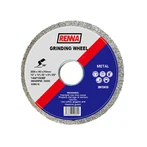
Green silicon carbide has high hardness and sharp particles, and is good at processing high-hardness, low-toughness materials: in the non-metallic field, it can be used for glass grinding, ceramic cutting, semiconductor silicon wafers, and sapphire polishing; in metal processing, it has excellent high-precision processing performance for materials such as cemented carbide and hardened steel, and is widely used in products such as grinding wheels and cutting discs. Black silicon carbide mainly processes low-hardness, high-toughness materials, and is suitable for the processing of non-ferrous metals and refractory materials such as cast iron, copper and aluminum. In rough scenes such as deburring castings and rust removal of steel, it has become a common choice in industry due to its high cost-effectiveness.
Although green silicon carbide and black silicon carbide belong to the same silicon carbide material system, their physical and chemical properties and application characteristics are significantly different. With the continuous innovation of materials science and processing technology, green silicon carbide and black silicon carbide are expected to achieve wider application expansion in high-tech fields such as semiconductor manufacturing, precision grinding, and new energy, providing key material support for the high-quality development of modern industry.