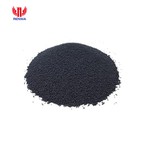
White aluminum oxide is white in appearance. Compared with brown aluminum oxide, it is harder and more brittle. It has stronger cutting force, better chemical stability and good insulation. White aluminum oxide can be used as consolidation and coating abrasives, wet or dry or blasting sand, suitable for ultra-fine grinding and polishing in crystal and electronic industries and making high-grade refractory materials. It is suitable for processing hardened steel, alloy steel, high-speed steel, high-carbon steel and other materials with higher hardness and tensile strength. It can also be used as a catalyst, insulator and precision casting sand without affecting the color of the processed parts.
1. Common models of white aluminum oxide
White aluminum oxide is widely used in all aspects of life. Therefore, in the process of use, people have summarized some commonly used models with high frequency of use, mainly:
⑴ Granular sand: No. 46, No. 60, No. 80, No. 100.
⑵ Segment sand: 0-1, 1-3, 3-5, 5-8, 8-12.
⑶ Fine powder: 325-0.
⑷ Micro powder: w5, w7, w63, w10, w14.
2. Advantages and disadvantages of commonly used white aluminum oxide
When using corundum products of different particle sizes, there is generally not much difference. The main thing is to choose products of different particle sizes according to different users. However, due to the different smelting methods of white aluminum oxide, the physical and chemical properties of the products are different. Products refined in a dumping furnace have a higher content of alumina. At the same time, the sharpness of the product is better. White aluminum oxide produced in a fixed furnace has better toughness. At the same time, due to the increase in production costs, the price of fixed furnace corundum is higher than that of dumping furnace corundum.
Therefore, you must choose the right product according to your scope of use during use.