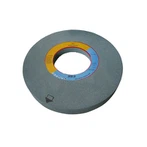
Customers often ask a few basic but important questions before discussing prices. What is brown aluminum oxide? What's the difference between first-grade and second-grade material? How should it be selected for different applications? Let's look at some common questions.
Q: What is brown aluminum oxide? Is it made from crushed stone?
No. Brown aluminum oxide is a synthetic material produced by smelting high-quality bauxite in an electric arc furnace at very high temperatures.
Its main component is aluminum oxide (Al₂O₃), which gives it high hardness, excellent wear resistance, and strong heat resistance. It is widely used in abrasives, refractory materials, sandblasting, anti-slip flooring, and grinding wheels.
Q: Why is it called "brown" aluminum oxide?
The material typically appears brown or dark brown due to its raw materials and manufacturing process.
However, color alone does not determine quality. Important factors include aluminum oxide content, impurity levels, particle size distribution, bulk density, and grain shape.
Q: What is the difference between first-grade and second-grade brown aluminum oxide?
First-grade brown aluminum oxide generally contains more aluminum oxide and fewer impurities, providing more consistent hardness and performance.
Second-grade material has a lower aluminum oxide content but offers a more economical solution for cost-sensitive applications.
The best choice depends on the application rather than simply selecting the higher grade.
Q: What should refractory manufacturers pay attention to?
For refractory applications, key factors include aluminum oxide content, refractoriness, particle strength, grain size distribution, and impurity control.
Consistent particle sizing and stable quality help improve product performance and make production processes easier to control.
Q: How is brown aluminum oxide for abrasives different from refractory-grade material?
Abrasive applications focus more on cutting performance, toughness, grain shape, and particle consistency.
For grinding wheels, abrasive cloth, and sandpaper, the grains must provide a good balance of hardness, toughness, and self-sharpening ability. Refractory applications, on the other hand, prioritize heat resistance and long-term stability.
That's why different industries often have different requirements for the same brown aluminum oxide material.