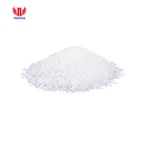
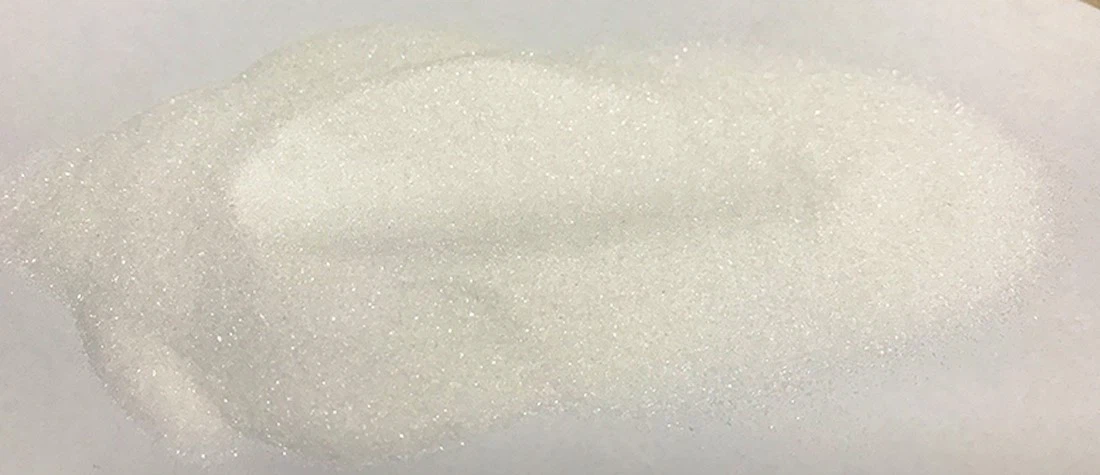
White fused alumina abrasive is a kind of artificial abrasive. Its production method is very complicated. It is made using a special smelting process. It is then crushed and shaped, magnetically separated to remove iron, and then screened into various particle sizes. How to detect the particle size of white fused alumina?
(1) Screening method.
Advantages: Simple, intuitive, low equipment cost, often used for samples larger than 40um.
Disadvantages: The results are greatly affected by human factors and mesh deformation.
(2) Microscopy (image) method.
Advantages: Simple, intuitive, capable of morphological analysis, suitable for samples with narrow distribution (the ratio of the maximum and minimum particle sizes is less than 10:1).
Disadvantages: Poor representativeness, it is troublesome to analyze samples with a wide distribution range, and samples smaller than 1um cannot be analyzed.
(3) Settlement method (including gravity settlement and Lixin settlement).
Advantages: The operation is gradual, the instrument can run continuously, the price is low, the accuracy and repeatability are good, and the test range is wide.
Disadvantages: The test takes a long time and the operation is cumbersome.
(4) Resistance method.
Advantages: Gradient operation can measure the number of particles, the equivalent concept is clear, fast, and accurate.
Disadvantages: Not suitable for measuring particle samples smaller than 0.1um. It is troublesome to replace small-hole tubes for samples with wide particle size distribution.
(5) Laser method.
Advantages: Easy operation, fast testing speed, wide testing range, good repeatability and accuracy, and can perform online measurement and dry measurement.
Disadvantages: The results are greatly affected by the distribution model, the instrument cost is high, and the resolution is low.
(6) Electron microscopy.
Advantages: Suitable for testing ultra-new particles or even nanoparticles, high resolution, and capable of morphological and structural analysis.
Disadvantages: few samples, poor representativeness, measurement is easily affected by human factors, and the instrument is expensive.
(7) Photoresist method.
Advantages: The test is convenient and fast, can measure the number of particles in liquid or gas, and has high resolution.
Disadvantages: It is not suitable for samples with a particle size less than 1umde. The system is rather finicky. It is only suitable for measuring dust, pollutants or diluted drugs. It is not used much for general powders.
(8) Breathing method.
Advantages: The instrument is low in price. There is no need to disperse the sample, and the testable material powder can be measured.
Disadvantages: Only the average particle size value can be obtained, and the particle size distribution cannot be measured; fine powder smaller than 5um cannot be measured.
(9)X-ray small angle scattering method. For particle size measurement of nanoscale particles.
(10) Photon correlation spectroscopy (dynamic light scattering method). For particle size measurement of nanoscale particles.