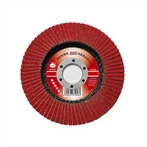
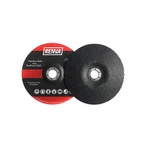
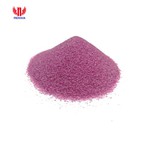
1. Mechanical polishing Mechanical polishing is a polishing method that obtains a smooth surface by removing the polished protrusions by cutting and plastic deformation of the surface of the material. Generally, you use whetstone strips, wool wheels, sandpaper, etc., mainly manual operations, and special parts such as turning On the surface of the body, auxiliary tools such as turntables can be used. For high surface quality requirements, ultra-precise polishing can be used. The ultra-precise grinding polishing adopts a special grinding tool. In the grinding polishing liquid containing abrasives, it is pressed against the surface of the workpiece to be processed for high-speed rotation. Using this technology can achieve a surface roughness of Ra0.008μm, which is the highest among various polishing methods. This method is often used in optical lens molds.
2. Chemical polishing Chemical polishing is to make the surface of the material microscopically convex in the chemical medium dissolve preferentially than the concave part, so as to obtain a smooth surface. The main advantage of this method is that it does not require complicated equipment, can polish workpieces with complex shapes, and can polish many workpieces at the same time, with high efficiency. The core problem of chemical polishing is the preparation of polishing liquid. The surface roughness obtained by chemical polishing is generally several 10 μm.
3. Electrolytic polishing The basic principle of electrolytic polishing is the same as chemical polishing, that is, by selectively dissolving the tiny protruding parts on the surface of the material, the surface is smooth. Compared with chemical polishing, the effect of the cathode reaction can be eliminated, and the effect is better. The electrochemical polishing process is divided into two steps: (1) Macro leveling The dissolved product diffuses into the electrolyte, and the surface roughness of the material decreases, Ra> 1 μm. (2) Low light leveling Anode polarization, surface brightness is improved, Ra <1μm.
4. Ultrasonic polishing Put the workpiece in the abrasive suspension and put it in the ultrasonic field together, rely on the vibration of the ultrasonic wave to make the abrasive grinding and polishing on the surface of the workpiece. Ultrasonic machining has a small macro force and does not cause workpiece deformation, but tooling production and installation are difficult. Ultrasonic processing can be combined with chemical or electrochemical methods. On the basis of solution corrosion and electrolysis, ultrasonic vibration is applied to stir the solution to dissolve the dissolved product on the surface of the workpiece, and the corrosion or electrolyte near the surface is uniform; the cavitation of ultrasonic waves in the liquid can also suppress the corrosion process and facilitate the surface brightening.
5. Fluid polishing Fluid polishing is used to wash the surface of the workpiece according to the high-speed flowing liquid and the abrasive particles carried by it to achieve the purpose of polishing. Common methods are: abrasive jet processing, liquid jet processing, hydrodynamic grinding, etc. Hydrodynamic grinding is driven by hydraulic pressure, so that the liquid medium carrying abrasive particles flows back and forth across the workpiece surface at high speed. The medium is mainly made of special compounds that flow through under low pressure and mixed with abrasives. The abrasives can be silicon carbide powder.