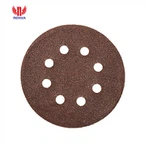
In surface grinding operations, the proper selection of the surface grinding wheel is critical to achieving both machining efficiency and workpiece quality. When grinding the circumference of the grinding wheel, a parallel surface grinding wheel with ceramic bond is commonly recommended. The grain size typically ranges from F36 to F60, and the hardness grade is selected between H and L to ensure moderate wear resistance and self-sharpening capability.
When grinding with the end face of the surface grinding wheel, the contact area between the wheel and the workpiece becomes significantly larger. This leads to difficulties in chip evacuation and increased heat generation. Therefore, in such cases, cylindrical or insert surface grinding wheel types using resin bond are preferred. Their grain size is usually coarser, ranging from F20 to F36, with a hardness grade between J and L, which helps improve heat dissipation and reduce thermal damage to the workpiece.
Selection of Grinding Amount
(1) Rotational speed of the surface grinding wheel:
The peripheral speed should be selected based on the wheel material, bond type, and workpiece material. Typical speeds range from 20 to 35 m/s for common applications, while higher speeds may be used with specially designed wheels.
(2) Longitudinal feed rate of the worktable:
For a rectangular worktable, the longitudinal feed rate is generally set between 1 and 12 m/min. Lower feeds are used for finishing or hard materials, while higher feeds are suitable for rough grinding or softer materials.
(3) Vertical feed (depth of cut) of the surface grinding wheel:
This parameter is determined according to the amount of cross feed (lateral feed). A smaller vertical feed is recommended when using a larger cross feed to avoid excessive grinding forces and thermal damage. For precision surface grinding, the vertical feed typically ranges from 0.005 to 0.05 mm per pass.