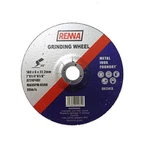
Non-woven fabric has been increasingly used in the grinding industry due to its unique properties. Unlike traditional woven fabrics, non-woven fabric is made by bonding fibers together rather than weaving them. This results in a material that is strong, durable, and flexible, making it ideal for use in the grinding industry.
One of the primary advantages of non-woven fabric is its ability to provide a consistent finish on a wide range of surfaces. Because the fibers are bonded together, there are no loose threads or fibers that can snag or pull during the grinding process. This means that non-woven fabric can provide a uniform finish, even on irregular or curved surfaces.

Another advantage of non-woven fabric is its versatility. It can be used for a variety of grinding applications, from rough grinding to fine finishing. Non-woven fabric can also be used with a variety of abrasive materials, including diamond, aluminum oxide, and zirconium oxide. This versatility means that non-woven fabric can be used for a wide range of applications, from metalworking to woodworking to automotive repair.
In addition to its versatility and consistency, non-woven fabric is also an environmentally friendly option. Because it is made from recycled materials, non-woven fabric has a lower carbon footprint than traditional woven fabrics. It is also fully recyclable, meaning that it can be reused and repurposed rather than ending up in a landfill.