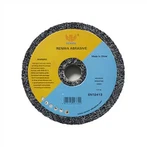
There are two main types of grinding wheels for shock absorbers: resin-bonded and vitrified wheels. Resin-bonded wheels are made by bonding abrasive grains together with a resin or synthetic compound, while vitrified wheels are made by firing a mixture of abrasive grains, clays, and feldspars in a kiln.
Resin-bonded wheels are best for repairing or reshaping shock absorbers, while vitrified wheels are used for precise finishing and polishing.
The quality and effectiveness of a grinding wheel largely depend on the materials used in its construction. For resin-bonded wheels, synthetic resins such as phenolic and polyimide are used for bonding, while vitrified wheels primarily use ceramic materials.

The abrasive materials used in grinding wheels for shock absorbers are typically made from aluminum oxide (Al2O3) or silicon carbide (SiC). While aluminum oxide is a versatile and cost-effective option for general grinding applications, silicon carbide is preferred for harder materials and high-speed applications.
Grinding wheels for shock absorbers are manufactured using varying processes, depending on the type of wheel and its intended use. Resin-bonded wheels are typically made using a molding or hot pressing process, while vitrified wheels are made through a complex firing process that involves kiln temperatures of up to 1400°C.
During the manufacturing process, the abrasive grains are carefully distributed and bonded together to form the wheel. The shape and size of the wheel are determined by the mold used, and finishing processes are employed to ensure proper balance and dimensional accuracy.