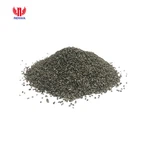
According to the different abrasive used, bonded abrasives can be divided into ordinary bonded abrasives and super hard bonded abrasives. The former is made of ordinary abrasives such as corundum and silicon carbide, while the latter is made of super hard abrasives such as diamond and cubic boron nitride. In addition, there are some special varieties, such as sintered corundum grinding tools.
The ordinary bonded abrasives is an abrasive tool which combines the common abrasives into a certain shape and has a certain strength. Generally composed of abrasives, bonding agent and pores, these three parts are often referred to as the three elements of bonded abrasives.
The abrasive plays a cutting role in the abrasive tool. Bonding agents are materials that consolidate loose abrasives into abrasive tools. The common bonding agents are ceramic, resin and rubber.
In the grinding process, the pores can hold the chip and remove the chip, and can hold the coolant, which is helpful for the heat dissipation. In order to meet some special requirements, some fillers, such as sulfur and paraffin, can be impregnated in the pores to improve the performance of the abrasive tool. This filler is also known as the fourth element of the abrasive tools.