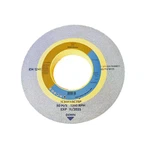
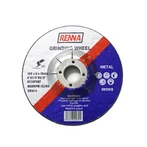
The brown aluminum oxide grinding wheel is one of the most important grinding tools widely used in industrial machining. Its performance depends not only on the quality of the raw materials but also on the precision of the production process. A well-controlled manufacturing process ensures stable grinding efficiency, long service life, and reliable safety during operation.
1. Raw Material Selection
The production of a brown aluminum oxide grinding wheel begins with the careful selection of raw materials. Brown aluminum oxide abrasive is chosen for its high hardness, toughness, and excellent wear resistance, making it suitable for heavy-duty grinding applications. At the same time, the bonding agent-such as ceramic, resin, rubber, or metal-is selected based on the intended application. The quality and proportion of these materials directly influence the final strength, hardness, and cutting performance of the grinding wheel.
2. Mixing and Forming
After selecting the materials, the abrasive grains and bonding agents are evenly mixed to ensure uniform distribution. This step is critical because inconsistent mixing can lead to uneven grinding performance or structural defects. The mixed materials are then pressed into shape using molds under controlled pressure. At this stage, the preliminary structure of the brown aluminum oxide grinding wheel is formed, including its density and internal porosity, which are essential for chip removal and heat dissipation during grinding.
3. Drying and Calcining
Once formed, the green grinding wheel undergoes a drying process to remove excess moisture and stabilize its structure. After drying, the wheel is calcined or fired at high temperatures. This step strengthens the bond between abrasive grains and the binder, giving the brown aluminum oxide grinding wheel its final mechanical properties. The temperature and duration of calcining must be precisely controlled, as they determine the wheel's hardness, strength, and durability.
4. Finishing and Inspection
After calcining, the grinding wheel is subjected to finishing processes such as shaping, balancing, and surface correction to ensure it meets dimensional and geometric requirements. Each brown aluminum oxide grinding wheel must pass strict quality inspections, including appearance checks and performance testing, to guarantee consistency and reliability. These inspections help prevent defects that could affect grinding accuracy or safety.
5. Safety Testing and Dressing
Before being put into use, the brown aluminum oxide grinding wheel must undergo safety tests, such as rotation tests to ensure it can withstand high operating speeds without failure. During actual use, the grinding wheel will gradually lose its sharpness and proper geometry, so regular dressing is required to restore its cutting ability and maintain optimal performance.
The production process of a brown aluminum oxide grinding wheel involves multiple precise and controlled steps, from raw material selection to final inspection. Each stage plays a vital role in determining the wheel's performance, safety, and service life. By optimizing the manufacturing process, users can achieve higher grinding efficiency, better surface quality, and improved overall productivity.