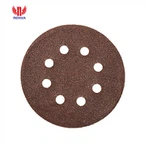
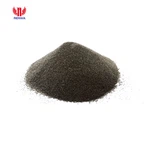
① The relationship between the molding density and the hardness of the abrasive tool. When the bonding amount is fixed, the molding density is increased within a certain range, and the hardness of the abrasive tool is also increased accordingly. However, when the molding density is too high and the bonding amount is large, the burnt Volume changes such as deformation and foaming will cause the hardness of the abrasive tool to decrease instead.
The reasons why the hardness of the abrasive tool is relatively increased by increasing the molding density are:
A. Shortening between particles. The binder bridge is relatively shortened. As the cross-section increases, the strength of the bond bridge and the bonding strength with the abrasive grains also increase relatively.
B. The increase in molding density increases the contact area between the bond and the abrasive grains, which is conducive to the chemical reaction between the abrasive grain surface and the bond, thereby increasing the hardness of the abrasive tool. This effect is more pronounced in boron-bonded abrasives. Therefore, when using a low-melting-point boron-containing binder, in order to obtain a high-hardness abrasive tool, in addition to adding a certain amount of binder, it is more important to increase the molding density to achieve a hardness above P level.
C. The tighter the structure of the abrasive tool, the harder the hardness of the abrasive tool is also reflected under the existing hardness testing conditions. The increase of molding density makes the organization compact, so the hardness of the abrasive tool is relatively hard.
Under normal circumstances, the molding density is increased by 0.04~0.10g/cm3, and the hardness of the abrasive tool is increased by one grade. When the bonding dose is large, the molding density increases by 0.10~0.15g/cm3, and the hardness of the abrasive tool increases by one grade. However, when the bonding amount is large, if the molding density is increased too high, the mold may foam and deform during firing, and the hardness will decrease instead.
But for water casting, the density of A/WA dry billet decreases by 0.04g/cm3, and the hardness increases by one level, while the dry billet density of silicon carbide changes from soft to hard, and the dry billet density does not change much.
② The relationship between molding density and abrasive structure: The true density of abrasive grains with the same abrasive and the same particle size is basically a constant. When the molding material ratio is constant, the molding density has a linear relationship with the abrasive grain rate of the abrasive body.
In general, for every 0.08~0.09g/cm3 increase in the molding density of corundum abrasives, the abrasive grain rate of the blank increases by 2% (that is, the organization number decreases by one). The molding density of the silicon carbide abrasive is increased by 0.08g/cm3, and the abrasive grain rate of the green body is increased by 2%. In fact, the abrasive grain rate of the abrasive body is not exactly equal to the abrasive grain rate of the burnt abrasive tool, because:
A. During machine press molding, the green body will not produce elastic deformation after pressure relief, and the volume will increase slightly. Generally, the molding density will decrease by 0.01~0.06g/cm3.
B. Deformation after drying and firing
C. Abrasive grains, bonding agent, wetting agent, etc. produce burning and chemical reactions during firing, which changes the total mass number of abrasive grains, bonding agent, wetting agent, etc.
Therefore, there is an obvious linear relationship between the molding density and the abrasive grain rate of the finished abrasive tool when the bond amount is fixed. When the bonding dose is small, the actual molding density increases by 0.01g/cm3, and the abrasive grain rate increases by 2%. Tool organization changes a number.
③ The relationship between the molding density and the porosity of the abrasive tool: when the molding density increases, the porosity decreases, and the relationship is linear. When the amount of binder is fixed, the ignition loss of the binder, wetting agent, etc. during firing is also constant, so the molding density and the firing porosity of the abrasive tool also have a linear relationship.
④ The relationship between the molding density and the wet and dry strength of the abrasive body: increasing the molding density will increase the contact surface area between the molding particles, and the physical adsorption and bonding between the particles will be enhanced, so the wet and dry strength of the green body will increase accordingly.
The strength of the wet billet is too low, and it is easy to be shaken and cracked during the handling after the mold is molded and demoulded. If the dry strength of the green body is too low, sand loss, edge loss or even fracture will occur during kiln loading. Therefore, if a grinding wheel with a very loose structure and a large porosity is required, simply reducing the molding density cannot be used in production. At this time, filler materials (such as naphthalene particles, carbon particles, etc.) must be added, and temporary binders (such as dextrin powder, resin liquid, etc.) must be added at the same time to increase the wet strength and strength of the green body after drying.
⑤ The relationship between molding density and molding pressure: When the formula and other process conditions are the same, increasing the molding pressure is the main means to increase the molding density. But the two do not constitute a stable relationship. Because when the humidity of the molding material changes, the same molding pressure will achieve different molding densities. The wetter the molding material, the smaller the pressure required, and the drier the molding material, the higher the pressure required. When the abrasive is changed from coarse to fine, to achieve the same molding density, the molding pressure needs to be increased, especially for abrasives with a particle size of F150 or finer, the molding pressure increases significantly.
⑥ Relationship between molding density and mold shrinkage after firing: In general, when the bonding amount is fixed, as molding density increases, mold shrinkage decreases. This is because molding density increases, porosity decreases, and shrinkage after firing Not obvious. However, when the molding density increases to a certain extent and there are more binders, foaming and deformation will occur when the abrasive tool is fired, and its shrinkage will be irregular.
The performance and addition amount of the binder itself, the type of abrasive and its particle size at firing temperature have a great influence on the shrinkage after firing. Corundum abrasives with high hardness and fine particle size tend to produce larger post-sintering shrinkage, so the relationship between molding density and post-sintering shrinkage is sometimes placed in a secondary position or ignored.
⑦ The impact of molding density on the tensile strength of finished abrasive tools: the tensile strength of abrasive tools reflects the breaking strength of abrasive tools during rotation, and increasing the molding density will also increase its tensile strength. For boron-containing fused bond abrasives, the impact of molding density on tensile strength is particularly important.