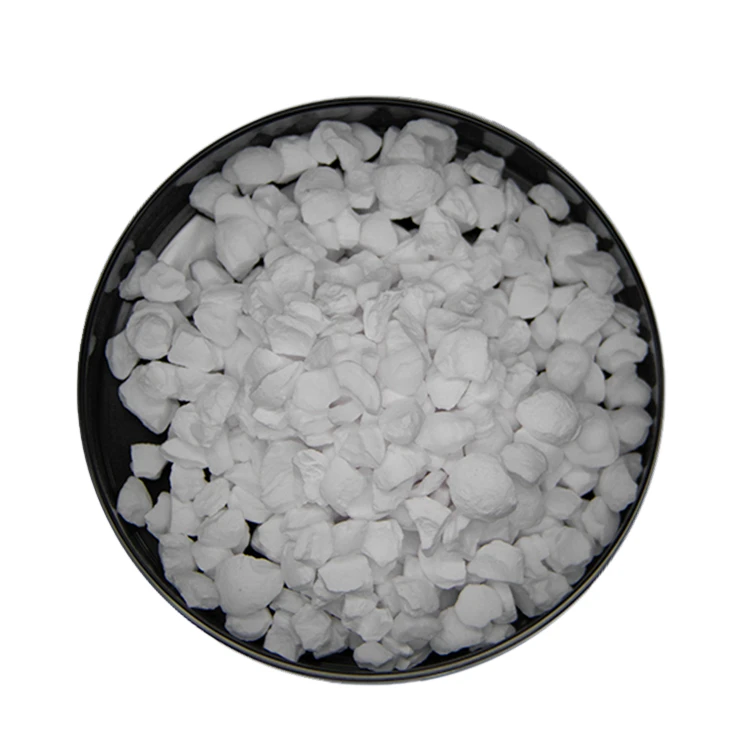
Tabular corundum is a pure sintered alpha corundum material, which is a dense body quickly sintered at temperatures higher than 1900°C without sintering aids. Its excellent thermal volume stability and thermal shock resistance can be attributed to the special microstructure of tabular corundum: few open pores, large crystals, and closed spherical pores that are trapped by recrystallization during rapid sintering. So what are the introduction and properties of tabular corundum?
 | 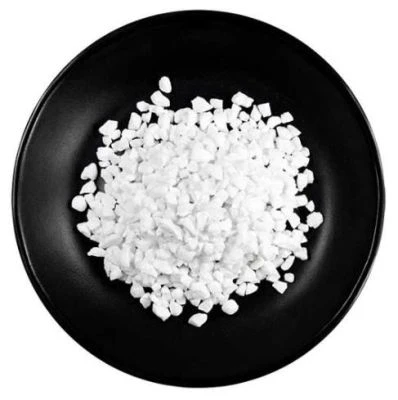 |
Tabular corundum introduction:
Tabular corundum has extremely high heat resistance, mechanical strength and wear resistance, high chemical purity, excellent insulation properties, and good acid and alkali corrosion resistance.
Tabular corundum is the preferred aggregate for amorphous and shaped high-performance refractories and is widely used in steel, foundry, petrochemical, ceramics and incineration industries. Other fields of application include electrical insulators, kiln furniture and catalyst supports. Ground tabular corundum powder is an excellent product for use as a filler in epoxy resins or resin systems, where high dielectric strength, thermal conductivity and abrasion resistance are desired.
Tabular corundum properties:
1. Test weight. The bulk density of tabular corundum refers to the weight of the material per unit volume in the natural state. Generally, tabular corundum with a small bulk density is beneficial to the dissolution in the electrolyte.
2. Granularity. The particle size of tabular corundum refers to its thickness. The particle size of tabular corundum must be appropriate. If it is too coarse, it will dissolve slowly in the electrolyte, or even precipitate; if it is too fine, it will be easy to fly and lose.
3. Specific surface area. The specific surface area of tabular corundum refers to the total surface area of the sum of the external surface area and the internal pore surface area of the material per unit weight. It is an important indicator of the activity level of a substance. Tabular corundum with large specific surface area has good solubility in electrolyte and high activity, but it is easy to absorb moisture.
4. Wear factor. The so-called wear coefficient is the percentage change of the particle size content in the sample after the tabular corundum is ground and collided on a fluidized bed under controlled conditions. The wear coefficient is a physical index that characterizes the strength of tabular corundum.